
Transforming Customer Success into a Revenue Engine.
-
A growing organization was underperforming post-sale. Customer Success operated reactively, leading to inconsistent engagement, rising churn risk, and untapped expansion opportunities.
Despite strong demand, the lack of structure across the customer experience made it difficult to deliver consistent value or scale retention effectively.
They didn’t need incremental improvements—they needed a system that drives retention and revenue predictably.
-
Reactive, support-led engagement model
No defined lifecycle or expansion strategy
Limited visibility into customer health and risk
Inconsistent onboarding and time-to-value
-
Issues
Customers were unclear on how to successfully progress through their journey
Value realization depended on reactive support rather than guided understanding
No consistent signals or structure to help customers know what to do next
Internal teams lacked a shared model for guiding customer behavior
Goals
Make the customer journey predictable and easy to navigate
Ensure customers always understand their next step toward value
Enable teams to deliver consistent, repeatable guidance
Reduce reliance on reactive support by improving clarity and structure
-
I redesigned Customer Success as a lifecycle-driven system aligned to revenue outcomes:
Built a clear lifecycle model (onboarding - adoption - optimization → expansion)
Introduced segmentation to balance high-touch and scalable engagement
Designed proactive playbooks triggered by real customer and market signals
Implemented a practical customer health framework for early risk detection
-
Increased Net Revenue Retention from 92% to 118% (+26 pts)
Reduced churn by 38% within 2 quarters
Increased product and service adoption by 30%
-
Most Customer Success transformations focus on tools or org structure.
I focus on decision systems:
What signals matter
When to act
What action drives value
This creates consistency, scalability, and measurable outcomes.
-
Retention is primarily a design problem, not a performance problem
Expansion must be intentionally built into the lifecycle
Early signals are the highest leverage point for interventionItem description
If your Customer Success team is busy but not driving measurable growth, there’s likely a system problem behind it.
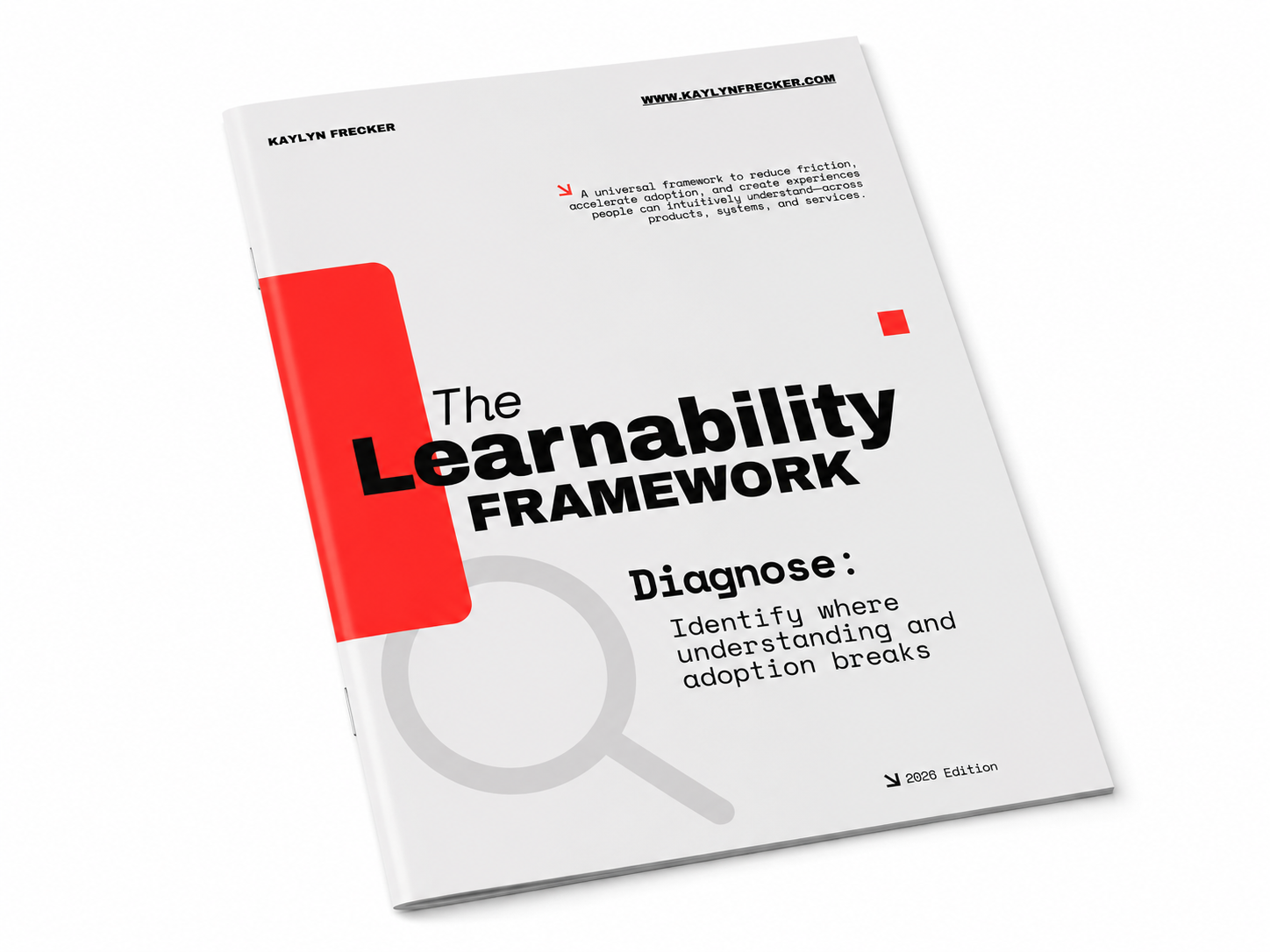
If People Need Constant Help, You Have a Learnability Gap.
This free learnability diagnose white paper helps you identify where users get confused, hesitate, disengage, or rely on support; so you can create experiences that feel intuitive from the start.