LEARNING EXPERIENCE DESIGN
Reimagining music learning through a more visual and engaging experience.
A gentle introduction to our musical world.
The Visual Foundations of Music (VFM) is not going to prepare your child to be a professional musician. Nor is this program for parents and teachers to identify or foster musical geniuses.
The VFM program consists of visual and kinaesthetic learning experiences for children to learn the basics of music - just how they would learn their first language.
THE VISION
Children learn by exploring musical concepts through active participation such as singing, movement, and creative play, rather than rote memorization or drills. Musical learning is interwoven in the experiences with storytelling, rhythm games and improvisation, allowing children to internalize fundamental concepts like pitch, rhythm, and dynamics in a natural and enjoyable way.
THE STEPS OF CREATION
PROBLEM & OPPORTUNITY
Access to quality music education is limited in Canada.
Only 20% of public schools report having a full-time music teacher and over 25% receiving minimal or no funding for music programs.
For those seeking private music lessons, affordability, rigid program structures, and traditional teaching methods create significant barriers, leading to a 75% dropout rate among students. This lack of accessible and inclusive music education deprives many students of the opportunity to explore and develop their musical potential.
THE OPPORTUNITY
There is a compelling opportunity to transform early childhood traditional music education by addressing critical gaps in accessibility and engagement.
By redefining the learning experience to align with global best practices and tailoring methodologies to various stages of physiological and psychological development, we can create a more inclusive, dynamic, and impactful approach to music education.
This program seeks to unlock the full potential of music as a tool for personal growth, well-being, and lifelong enrichment, reaching young learners who are currently underserved by existing systems.
PROGRAM DESIGN
OUTCOMES, METHODOLOGY & BRAND
VFM redefines childhood music education with an inclusive, dynamic approach.
OUTCOMES
At the end of the program, children will be able to:
Recall and recite the basic vocabulary of music
Identify and correctly sequence notation
Identify and replicate dynamics
Read and recite music and dynamic notation
Recognize and replicate music and dynamic notation
Decide what instrument and musical genres they want to play
METHODOLOGY
VFM is a blended learning program that includes a combination of parent/guardian-led activities as well as self-directed exploration learning experiences for children to play and complete as they wish.
Structured to learn: sequenced based on the psychological development stages for early childhood so it meets the learner where they are.
Playing to learn: freedom to explore music with their bodies (not just their hands) and learning by play with engaging and familiar game mechanics.
Visual to learn: tap into their senses with bright colours, characters, and stories that are friendly and create a safe place to learn.
BRAND
VFM blends Western and Eastern methodologies, aligning with early childhood physiological and psychological development.
To enhance engagement, we introduced playful characters that categorize learning: a monkey for "fun and play" (Vocabulary, Reading, Playing) and an octopus for "Writing" (many arms to write with). These characters not only help organize materials but also foster emotional connections with children.
Unlike outdated competitors lacking personality and brand cohesion, VFM stands out with a vibrant, well-defined brand story. Our logo and visuals embrace a playful yet clean aesthetic, using bold shapes, engaging characters, and fully saturated colors to captivate young learners and their guardians.

Program Materials
-
![Close-up of a set of pink common note cards with white borders and black text, stacked on a black surface. The visible section of the top card reads 'NOTE CARDS' and 'SETUP & INCLUDED ITEMS'.]()
Note & Dynamic Cards
Unlike traditional flashcards, these interactive music notation and dynamic flashcards engage both children and parents/guardians in sequencing exercises, with built-in feedback for incorrect orders.
Note Cards I & II: Cover 1 octave A-G notation (I) and A-G with flats and sharps (II).
Dynamic Cards I & II: Introduce 4-scale dynamics (I) and expand to 8-scale dynamics (II).
Each kit includes dual-sided flashcards, instructions, and answer keys, with a recommended progression from individual mastery to mixed-use for deeper learning.
-
![Pink and white spiral notebook with the word "musicary" printed on the cover, placed on a dark surface.]()
Musictionary
Music-tionary is exactly what you think it is - a dictionary of commonly used music terms. This is for both child and parent/guardian, and contains imagery next to a definition - allowing for an easier and cooperative learning experience.
It has six sections including; lines, clefs, notes and rest, note relationships, accidentals and dynamics. This is a great tool to always have around when working on any other pieces of the program as a reference tool.
-
![Close-up of the Connect logo on a wireless router or modem, showing a large blue number 6 with a Wi-Fi symbol above it on a white background.]()
Relay Books
Music repertoire books are boring and do not have a sequential method of learning notes in relation to a song.
These music melody books visualize the letters and notation for popular melodies into easy to read and play sequences.
Songs include Hot Cross Buns, Mary Had a Lamb, Three Blind Mice, Polka Dot Pokie, Flying to the Moon and True North Strong.
-
![Close-up of a colorful board game with numbered and labeled sections, focused on the 'LEFT HAND' area in blue, with other sections in yellow, purple, and red, and gridlines.]()
Spin & Seek
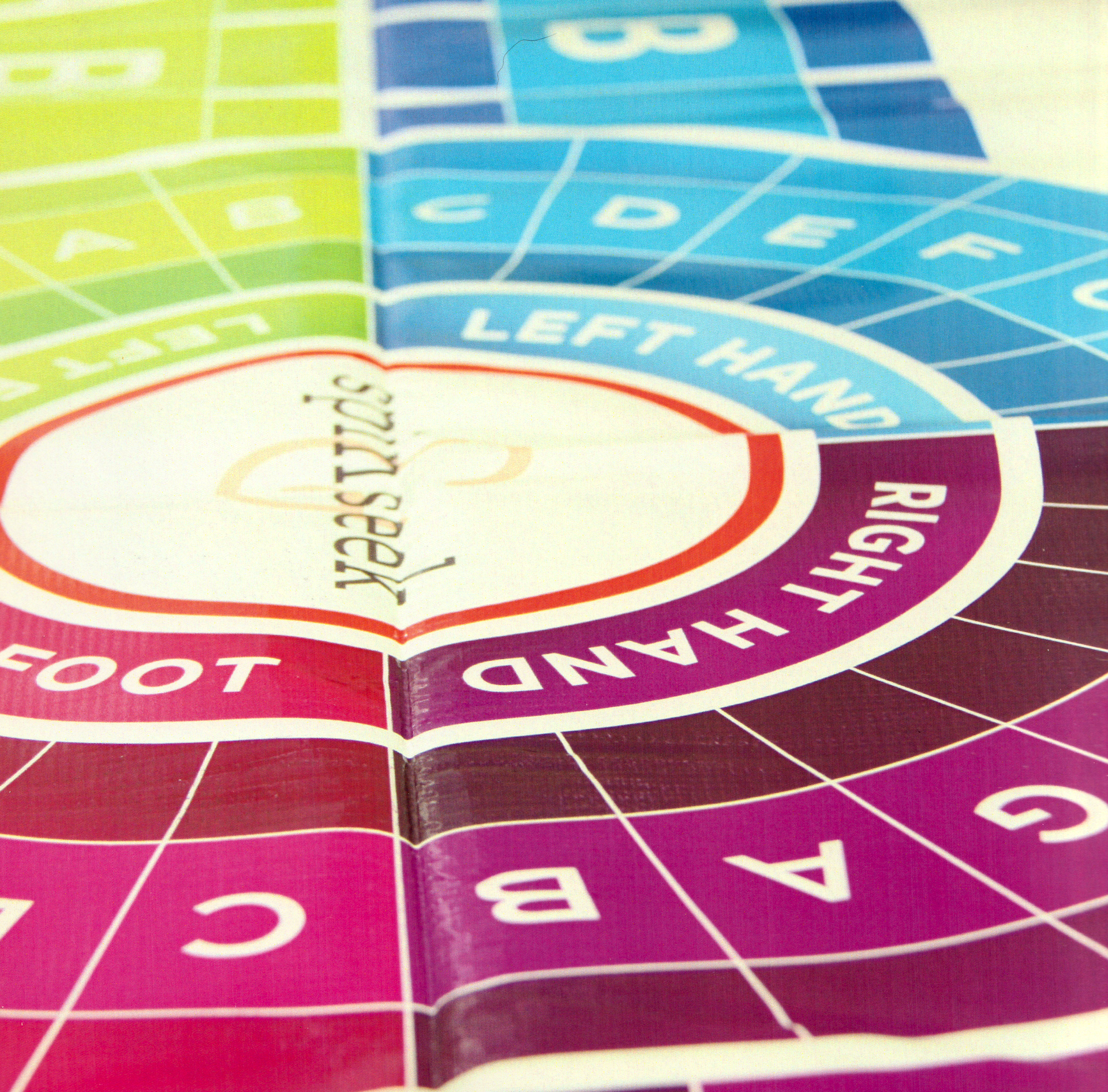
Instead of repertoire books and easy to play workbooks, a board game is much better suited to a child's desire to ‘play’. Think of the game ‘Twister’, Spin & Seek extends teaching of note recognition and introduces the concept of body coordination and concentration on a task.
Children will learn all the natural notes and will have to distinguish between right-treble and left-bass clefs. The parent/guardian acts as the referee of the game and is encouraged to be involved to ensure accuracy.
-
![A multiple-choice answer sheet with the heading 'Composer 3: Exercise One,' featuring circles for filling in answers labeled with letters A, B, and C, on a white sheet with purple and black sections, against a dark background.]()
Composer Books
Composer Books transform traditional music repertoire into an engaging, sequential learning experience. Unlike standard music books, which often lack structure in teaching note recognition, these workbooks guide students through a step-by-step approach to reading and writing music.
By visualizing popular melodies in easy-to-follow sequences, Composer Books ensure students develop confidence in music reading and writing while staying engaged with interactive exercises.



RESEARCH & RESULTS
Learner-friendly sheet music should be appealing; if it’s easier to learn, more people would be doing it.
I conducted research across three learning theories and pedagogical frameworks to ensure an evidence-driven approach.
Reading music can be daunting and is usually a huge barrier of entry for someone just starting to learn. This is a huge area of opportunity for design to do all that is possible to save learners time, build confidence and keep fuelling their intrinsic motivation - this is exceptionally important for our young learners and this foundational program to be successful in addressing the unmet need in the market.
Many teachers try to accommodate the various learning styles of their learners, but this can be an overwhelming task. Linda Kreger Silver, an (child development theorist), suggests that less than 30% of the population strongly uses visual/spatial thinking. On the other hand, 45% use both visual/spatial thinking and thinking in the form of words, with the remaining 25% thinking exclusively in words. This shows us that 75% of the population could benefit and thrive in a visual-based music program if we leverage this delivery mechanism appropriately.
THE RESULTS
I tested the VFM approach against traditional music learning methods to understand whether a more visual, interactive experience could improve how children learn and retain musical concepts.
A pilot group of children followed a traditional learning approach, using conventional instruction, written notation, and standard practice exercises.
A second pilot group used the VFM program, which introduced visual learning, interactive exercises, contextual feedback, and more immediate opportunities to apply what they were learning.
Both groups were evaluated across engagement, knowledge retention, drop-off, and course completion.
The results showed a clear difference:
Increased engagement by 40%+
Children using VFM interacted more frequently and spent more time actively participating in the learning experience.
Improved knowledge retention by 30%
Visual and interactive reinforcement helped children recall and apply musical concepts more effectively over time.
Reduced drop-off by 25%
Breaking learning into more approachable, interactive experiences helped reduce the number of children disengaging during the program.
Increased completion rates
More children progressed through the full learning journey, suggesting that the experience was not only more effective—but more motivating to complete.

-
The traditional Western approach to music education emphasizes formal training, often at the expense of intuitive understanding and emotional connection. Children are pushed to read and play music before developing foundational musical literacy, such as rhythm and creative play, leading to frustration and a loss of long-term engagement. Parental pressure to meet short-term goals, coupled with rigid curriculums focused on classical music, alienates students—especially teens—by ignoring their personal music preferences and intrinsic motivations. Without fostering a reciprocal relationship between parent, child, and teacher or embracing diverse genres, music education risks disengagement and missed opportunities for deeper connection and sustained participation.
-
Eastern music learning theory places a strong emphasis on holistic, experiential, and intuitive approaches to early childhood music education. Rooted in cultural traditions, this method views music as a way to nurture the whole child—emotionally, cognitively, and socially—rather than focusing solely on technical skill acquisition. Discovery and inquiry are central to this approach, where children are encouraged to explore musical concepts through active participation, such as singing, movement, and creative play, rather than rote memorization or drills. Musical learning is often interwoven with storytelling, rhythm games, and improvisation, allowing children to internalize fundamental concepts like pitch, rhythm, and dynamics in a natural and enjoyable way. Additionally, the use of high-quality musical materials and instruments introduces children to rich, diverse sounds, helping them develop a sensitive ear and deep appreciation for music. By fostering creativity, emotional connection, and cultural understanding, the Eastern approach equips children with both a strong foundation in music and a lifelong passion for learning.
-
The most critical period for music learning begins at birth—if not earlier—and extends through the first 18 months of life. During this stage, children primarily learn through sensory exploration and unstructured guidance. Language development also starts at birth, and music can be seen as an extension of human communication. However, while music shares similarities with language in how it is acquired and internalized, it is better understood as a form of expressive literature rather than a language. In this sense, children learn music intuitively, much like they learn to speak—through exposure, imitation, and interaction. While the ability to read music is an important component of musical proficiency, it should be introduced only after a strong foundation of musical understanding and expressive skills has been established, ensuring that reading supports rather than overshadows the child’s natural musical development.
Let’s talk about what you’re trying to solve.
I take a small number of new engagements each year. If your challenge sounds like the work above, I’d love to hear about it.